
 Look how old this is!
 I post at SearchCommander.com now, and this post was published 14 years 4 months 26 days ago. This industry changes FAST, so blindly following the advice here *may not* be a good idea! If you're at all unsure, feel free to hit me up on Twitter and ask.
Doing a search the other day I was stunned to see a new interface from Google showing me tabbed results, with other relevant search phrases lined up across the top.
I had been using a brand new laptop, so I walked over to my main computer to get a screen shot, and I wasn’t able to re-create them. I went back to the laptop, did a search, and *poof* they were gone.
A couple of days later, Iman from Train Signal noticed it too, and he managed to get a a couple of screenshots up.
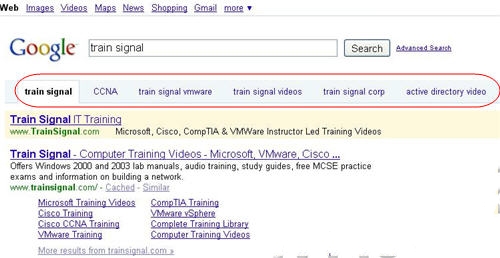
Assuming that this display of SERPS becomes the norm, this is going to cause search marketers to rethink what phrases they optimize for and what phrases they bid on via PPC.
For our own sites, I’ve always focused my organic efforts on phrases which had the highest frequency of search. Gearing content and inbound links for those highest volume phrases seemed like it offered the most bang for the buck.
It was the same thing for PPC really, and by looking at the “impressions” column in Google Ad Words, we know what words are searched for the most frequently, and we could adjust our bids accordingly.
Now though, in showing us these terms, Google is giving us more food for thought.
But Where Are These Terms Coming From?
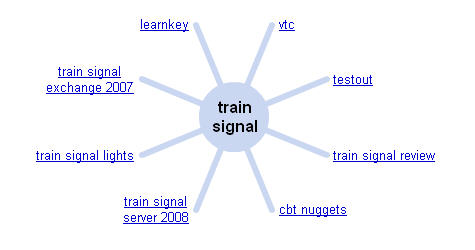
Savvy marketers have been poking around Google’s “Wonder Wheel” for some time now, because it really gives you good insight into the logic behind what Google believes is relevant. (Here’s a short Wonder Wheel video I made a few months back)
In thinking about it, I had assumed that these related tabs were coming from the same place as the Wonder Wheel terms, but I can see that’s not the case by doing the same search that Iman did.
As you can see, NONE of the phrases are the same, which leaves me to wonder what’s really driving these relationships of supposedly “related terms”?
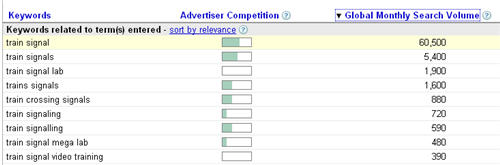
They’re not coming from the highest volume searches according to Googles keyword tool either. Despite playing with the match type, I couldn’t get a similar set of results to come up at all.
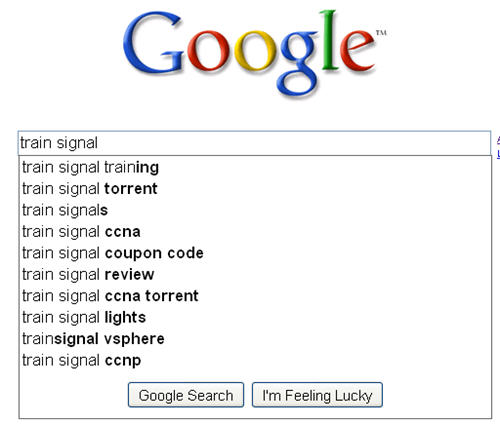
If they’re not from the keyword tool, and they’re not from the Wonder Wheel, I thought they might be coming from the Google Suggest feature, which has been a REALLY great way to do some keyword brainstorming, but nope, that’s not the case either.
What’s the Point of the Tabs?
I have to wonder, what is Google’s motivation for putting these tabbed links up there in the first place?
Will they really be showing end users the most relevant results or will they just be hoping to show more niche searches to get their ad revenue up?
Some on the web are speculating that Google is simply trying to monetize every aspect of search, that they’re trying monopolize online shopping, and maybe that they’re becoming the worlds largest super affiliate.
I’ll leave it to people far smarter than I am to figure out the inner workings of where this information is coming from, but it won’t surprise me if it turns out they have something to do with how well advertised the phrases are, with high search volume and a higher CPC.
Wherever they’re coming from, these related search term tabs are going to be right in everyone’s face, and should dramatically increase the use of these related searches by consumers and by marketers, as we look for new opportunities to target, both organically and via PPC.













Ah great spot, but do we really need a new method we need to learn to optimise for?
The tabs seem a more dynamic way of displaying multiple pages so I assume the same 92-98% of clicks will goto the first tab!
The only real thoughts I have on the issue on how they are formed is that Google is finally using the data from search refinements. So these might be some of the secondary queries that people search for after the primary phrase doesn’t get them the results they expected.
That’s a good theory David, and far less conspiratorial than mine 😉
@Scott yes i try not to fan the tinfoil hat theories too much.
But if you are looking for conspiratorial theories, speak with @Iman from TrainSignal you might be able to get some more data from their Google Analytics account.
If you are looking for sinster plans I would suggest tracking how these keywords work atm….
Points to check on how the keywords shown in the “tabs” on the quality of the traffic.
How do the “tab” keywords convert
What is the bounce rate of the “tab” keywords
What is the time on site of “tab” keywords
What is the number of pages viewed of “tab’ keywords
Good points. It’ll be interesting to see those tabbed results again someday long enough to look.
Over the holiday weekend I even played around with the diff Google datacenter results here just to see if I could recreate it, and I couldn’t. Oh well, plenty else to do 😉
Googz seems to be throwing in some new features with almost no publicity, too. The SERP URL’s are now formatted to show a more intuitive URL rather than a full URL. Almost like bookmarks. This, with Google Caffeine makes BING have to stay on their toes bigtime if they want to compete.
Plagiarism Checker